

Kırşehir Zirconium Coating
Natural-looking, durable dental restorations in Kırşehir using a highly translucent zirconia coating. CAD/CAM digital fabrication and personalized shade selection at Ayaz Dent.
Zirconia dental crown treatment in Kırşehir is a metal-free, fixed restoration method used to restore the appearance, shape, and function of teeth.
Discoloration, fractures, large fillings, malocclusions, and significant tooth structure loss that develop over time can negatively affect both chewing function and the aesthetics of your smile. In such cases, zirconia-based dental crowns may be a treatment option. Thanks to their white ceramic framework, various durability options, and custom fabrication, zirconia restorations can be used on both front and back teeth.
Zirconia crowns do not offer a one-size-fits-all solution for every aesthetic expectation or dental problem. The tooth’s existing structure, gum line, occlusal forces, previous fillings, root canal treatment status, risk of decay, and oral hygiene habits must all be evaluated together. In some cases, composite restorations, teeth whitening, porcelain laminate veneers, orthodontic treatment, or other all-ceramic options may be more conservative. At Ayaz Dent Dental Clinic in central Kırşehir, when planning zirconia crowns, we evaluate not only tooth color and shape but also the restorations’ cleanability, their relationship with the gums, how they withstand chewing forces, and their overall fit within the mouth.
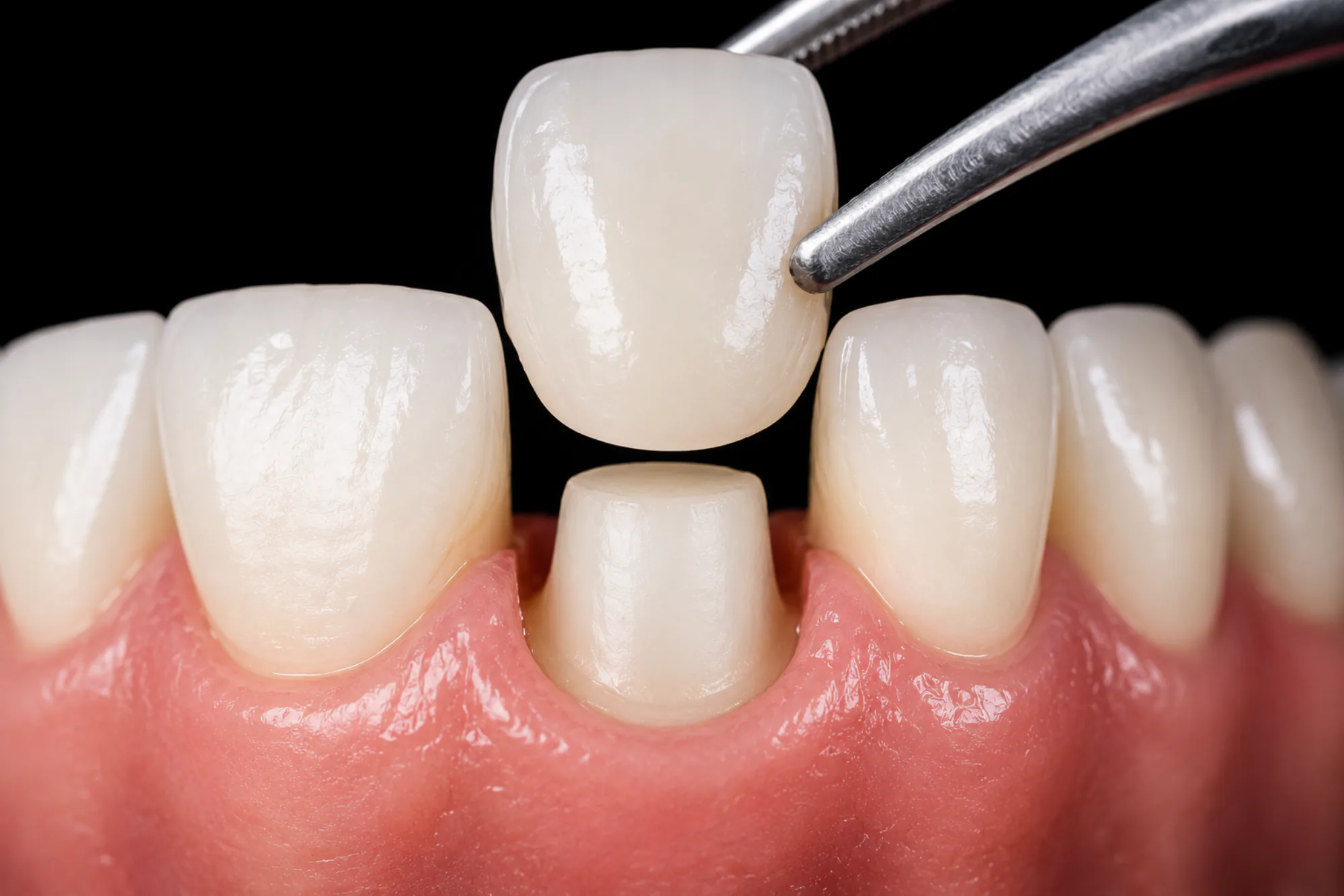
What Is a Zirconia Dental Crown?
A zirconia dental crown is a fixed restoration made primarily of zirconia dioxide that is placed over a prepared natural tooth or a suitable implant abutment. Although commonly referred to as a “zirconia tooth” in everyday language, the natural tooth is not completely transformed into zirconia during treatment. Instead, a crown prepared in a laboratory or using digital fabrication systems is placed over the tooth.
Zirconia falls under the category of technical ceramics used in dentistry. Its white-colored substructure can help reduce the dark reflection sometimes seen in metal-supported porcelain crowns. Light transmission, durability, and aesthetic properties may vary depending on the type of zirconia used.
Zirconia restorations can generally be prepared in two basic forms:
- Monolithic zirconia: Most or all of the restoration is made from a single piece of zirconia. It can be used in the posterior regions where high chewing forces are present.
- Porcelain-layered zirconia: Aesthetic porcelain layers are applied over a zirconia substructure. This option may be preferred in the anterior regions where color transitions and surface details are important.
The choice of structure depends on the tooth’s location, available space, occlusal relationship, aesthetic expectations, and the condition of the supporting tissues.
How Are Zirconia Crowns Manufactured?
Zirconia crowns are typically fabricated using computer-aided design and manufacturing (CAD/CAM) systems. After the teeth are shaped according to the treatment plan, impressions are taken using either traditional methods or intraoral digital scanning. The obtained data is transferred to the laboratory.
The dental technician designs the restoration’s inner surface, outer form, contact points with adjacent teeth, and relationship with the opposing jaw in a digital environment. Once the design is complete, the zirconia block is machined using a milling machine. The produced restoration is sintered at a temperature specified in the material’s technical protocol to achieve its final strength.
In monolithic restorations, surface staining and glazing may be performed. In layered restorations, dental porcelain is applied over the zirconia framework. During this process, efforts are made to mimic the color transitions, surface textures, and light reflections seen in natural teeth.
In the final stage, the restoration is checked in the clinic to ensure it fits the tooth perfectly, including marginal fit, color, surface texture, and occlusal relationship. Although digital fabrication offers the possibility of a controlled design, it does not, on its own, ensure a perfect fit. Proper tooth preparation, impression quality, laboratory procedures, and clinical try-ins are all equally important.
Properties of Zirconia Dental Crowns
Durable Ceramic Structure
Zirconia is one of the materials with high mechanical strength among dental ceramics. When the correct thickness and design are ensured, it can also be used on posterior teeth. However, the durability of the crown does not depend solely on the material. Teeth-grinding habits, restoration thickness, occlusal contacts, the remaining tooth structure, and laboratory design can also affect the outcome.
Aesthetic Appearance
Zirconia’s white substructure can help reduce dark metal reflections at the gum line. New-generation zirconia with high light transmission can support the creation of color transitions similar to natural tooth structure. For restorations in the anterior region, material selection should be based on the tooth’s current shade and its harmony with adjacent teeth.
Tissue Compatibility
Zirconia is used in dentistry as a material compatible with biological tissues. However, the health of the gums surrounding the crown is not determined solely by the material. The marginal fit of the crown, surface polish, oral hygiene, smoking habits, and existing gum diseases may be more decisive factors.
Low Thermal Conductivity
The thermal conductivity of ceramic materials differs from that of metals. Nevertheless, sensitivity to hot and cold sensations following the placement of a crown cannot be attributed solely to the type of material. The extent to which the tooth was prepared, the condition of the pulp, the bonding system used, and any previous restorations on the tooth can all influence sensitivity.
Various Color and Transluency Options
Zirconia blocks can be produced with various color, opacity, and light transmission options. More opaque materials may be preferred in cases where discolored dental tissue needs to be masked, while more translucent materials may be chosen for anterior teeth where aesthetic transitions are important.
What Are the Advantages of Zirconia Crowns?
- Thanks to their white substructure, they can reduce dark metal reflections at the gum line.
- Different types of zirconia can be used in the anterior and posterior regions.
- It can be used for single crowns, bridges, and implant-supported restorations.
- They can be custom-designed using CAD/CAM systems.
- It offers options for patients who prefer metal-free restorations.
- It can be adapted to aesthetic planning with various color and light-transmission options.
- When proper surface preparation and maintenance are provided, it can offer a restorable restoration.
These features do not mean that zirconia crowns are always better than other materials. In some cases, thin porcelain veneers, lithium disilicate restorations, metal-supported porcelain, or composite treatments may be more appropriate.
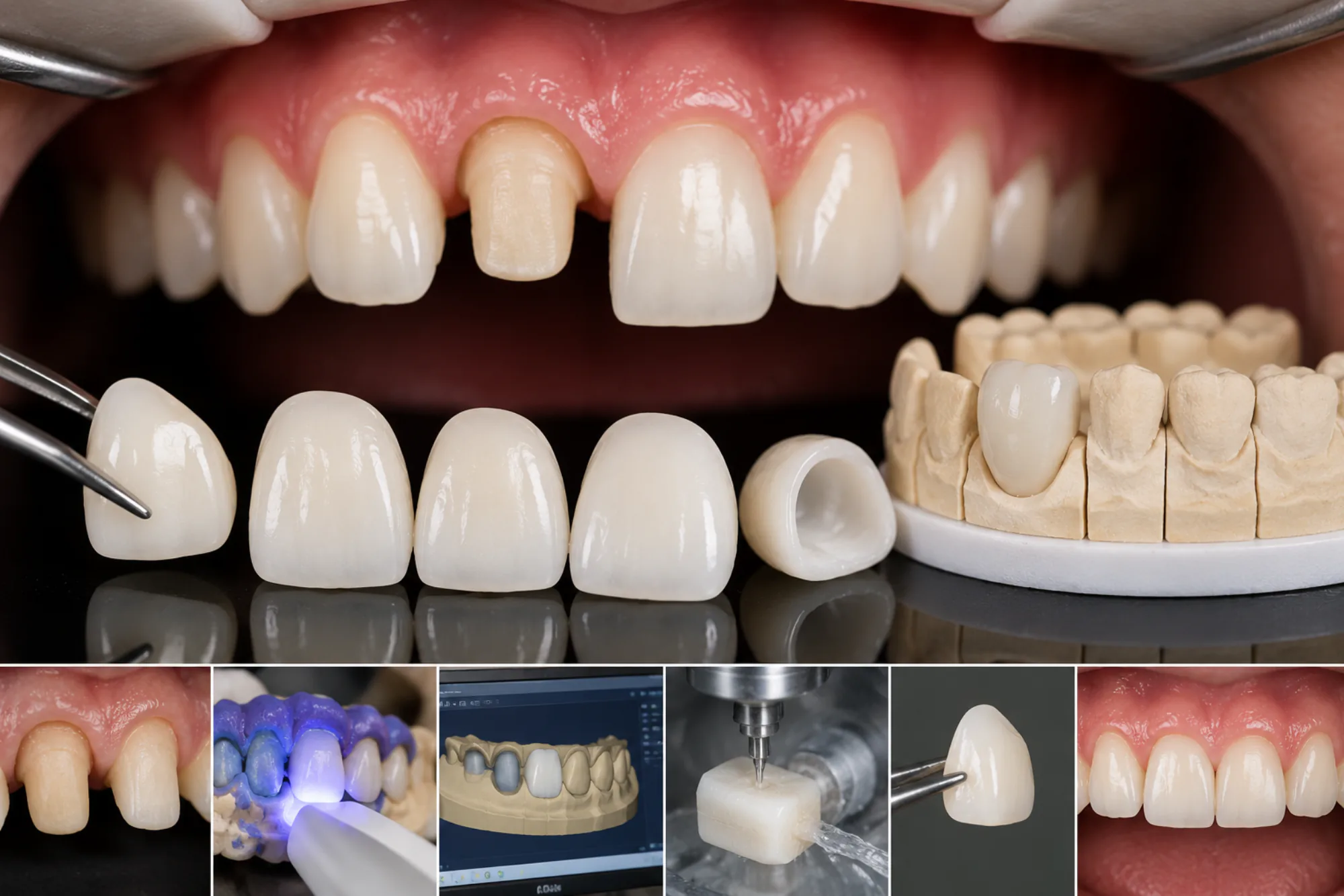
How Are Zirconia Dental Crowns Made?
Initial Examination, Diagnosis, and Planning
Before treatment, the teeth, existing fillings, gum tissues, and bite are evaluated. Radiographic imaging is performed in the necessary areas. The condition of the tooth roots, previous root canal treatments, bone level, and the support capacity of the teeth planned for crowns are examined.
In cases where aesthetic expectations are a factor, intraoral and facial photographs may be taken. The length and width of the teeth, midline alignment, lip support, and the amount of gum tissue visible when smiling are evaluated. The goal is not merely to create whiter teeth, but to achieve a result that harmonizes with the face and the existing dental structure. Preparation of the Teeth
Controlled enamel reduction is performed around the tooth to ensure the selected restoration can be prepared to the necessary thickness. The amount of enamel reduction varies from tooth to tooth. The tooth’s position, color, extent of tooth structure loss, previous fillings, and the type of zirconia selected all influence the scope of the procedure.
The procedure is typically performed under local anesthesia. The goal is to preserve as much healthy tooth structure as possible while creating sufficient space for the restoration. Zirconia does not always require less tooth reduction; the amount of preparation needed varies depending on the specific case.
Impression Taking: Traditional and Digital Methods
The prepared teeth can be recorded using silicone-based impression materials, or a digital model can be created using an intraoral scanner. In both methods, it is important to clearly capture the margins of the crown and the surrounding gum tissue.
Digital impressions allow data to be transferred to a computer without the need for a physical mold. This can be more comfortable, especially for patients with a gag reflex. However, additional preparation may be required in areas with deep gingival margins, bleeding sites, or hard-to-reach areas.
Preparation of Temporary Crowns
While permanent restorations are being prepared, the teeth are protected with temporary crowns. Temporary crowns support aesthetic appearance and basic chewing function. They can also help prevent tooth movement and preserve gum contour.
Temporary crowns are not as durable as permanent restorations. During this period, patients should avoid hard and sticky foods, and floss as directed by the dentist.
Design and Fabrication with CAD/CAM
Based on impression data, the inner surface, outer shape, contact points, and occlusal surface of the restoration are designed. The designed restoration is milled from a zirconia block, sintered, and the necessary aesthetic finishing touches are applied.
In anterior restorations, color transitions, surface texture, and light reflections can be addressed in greater detail. In posterior restorations, however, durability, cleanability, and balanced force distribution may take priority.
Trial Fitting and Permanent Cementation
After the temporary crowns are removed, the zirconia restorations are tried in on the teeth. Marginal fit, contact with adjacent teeth, shade, form, and occlusal relationship are checked. Once the necessary adjustments are complete, the crowns are cemented using an appropriate dental cement or bonding protocol. Carefully removing any excess adhesive is crucial for gum health. After the procedure, the patient is provided with information on cleaning methods and the follow-up schedule.
How Should You Care for Your Zirconia Dental Crowns After Placement?
Zirconia crowns do not decay; however, decay can develop in the natural tooth structure beneath the crown and along the crown margins. Inadequate care can also lead to gum inflammation and bone loss. Therefore, daily oral hygiene plays a crucial role in the longevity of the restoration.
- Teeth should be brushed at least twice a day using the proper technique.
- The interdental spaces between the crowns should be cleaned with dental floss or an appropriate interdental brush.
- For the areas under the abutments of dental bridges, special dental floss or an oral irrigator may be considered.
- Ice, pits, hard shells, and similar substances should not be cracked with the teeth.
- A night guard may be recommended for patients who grind their teeth.
- Check-up intervals should be determined based on the patient’s risk of cavities and gum disease.
Tea, coffee, and tobacco use do not change the color of zirconia, but they can lead to surface buildup and discoloration of natural teeth. Regular professional care and oral hygiene help maintain color consistency.
Who Is a Good Candidate for Zirconia Crowns?
- Patients with teeth that need to be reinforced due to large fillings or significant tooth structure loss
- Patients whose broken or worn-down teeth require reshaping
- Teeth suitable for restoration following root canal treatment
- Cases where color and shape irregularities cannot be corrected with more conservative methods
- Patients who prefer fixed crowns without a metal substructure
- Individuals with suitable teeth requiring a single-tooth crown, bridge, or implant-supported prosthesis
The decision to proceed with a crown should not be based solely on aesthetic expectations. More conservative treatment options should be considered instead of unnecessarily reducing healthy and largely sound teeth.
Who Is Not a Candidate for Zirconia Crowns?
In patients with active gum disease, untreated cavities, root tip infections, or poor oral hygiene, these issues must be resolved first. For some teeth with insufficient tooth structure, a filling, post placement, gum contouring, or a different treatment plan may be required.
In patients with severe teeth clenching and grinding, the mechanical risk associated with crowns may increase. It is important to perform a bite analysis before treatment and, if necessary, plan for a protective night guard.
How Long Does Zirconia Dental Crown Treatment Take?
The treatment duration varies depending on the number of teeth to be crowned, laboratory procedures, gum condition, and any additional treatments. In some cases, a limited number of crowns can be completed in just a few appointments. However, in smile makeovers involving multiple teeth, the process may take longer due to try-in and adjustment phases.
If gum treatment, root canal treatment, tooth extraction, or implant placement is required, the crowns are scheduled according to the healing times of these procedures. The exact duration can be determined following a clinical examination.
What Are the Key Differences Between Porcelain and Zirconia Teeth?
The term “porcelain tooth” does not refer to a single material. In everyday use, it most often refers to metal-supported porcelain crowns. Zirconia crowns also fall under the ceramic category; however, their substructure consists of zirconium dioxide rather than a metal alloy.
Substructure | Zirconia-based ceramic | Porcelain on a metal alloy |
Color | White substructure | Gray or dark metal framework |
Aesthetic properties | More natural light transmission can be achieved depending on the material type | May appear more opaque due to the metal framework |
Gum line | No dark line caused by the metal is visible | The metal edge may become visible if the gums recede |
Durability | Can be used on both anterior and posterior teeth when properly designed | A durable option with a long clinical track record |
Porcelain veneer | Porcelain fractures may occur in layered designs | Fractures may occur in the porcelain layer over metal |
Material selection | Can be considered based on aesthetic expectations and the desire for a metal-free substructure | Can be evaluated based on cost, available space, and clinical requirements |
Both types of restorations can be used for a long time with proper case selection and regular maintenance. The decision should not be based solely on the question “which one is stronger?” but should be made by evaluating the tooth’s location, aesthetic requirements, remaining tooth structure, and budget together.
How Do I Decide Whether to Get a Porcelain or Zirconia Crown?
When selecting a material, the first consideration is which tooth the crown will be placed on. For front teeth, translucency and the appearance at the gum line may be more important. For back teeth, however, chewing forces, restoration thickness, and available space may take precedence.
The tooth’s natural color also influences material selection. A more opaque material may be needed to mask a severely discolored tooth. For single-tooth restorations where color matching with adjacent natural teeth is required, different ceramic options can be compared.
Teeth-grinding habits, the number of missing teeth, bridge length, gum level, and the patient’s oral hygiene routine are also factored into the decision. In some cases, monolithic zirconia may be more appropriate, while in others, layered zirconia, metal-supported porcelain, or different all-ceramic options may be more suitable.
The most appropriate decision is made by evaluating clinical examination, radiographic findings, and aesthetic expectations together. It is not sufficient to make a choice based solely on the color or type of restoration seen on social media.
How Long Do Zirconia Crowns Last?
There is no definitive lifespan for zirconia crowns that applies to everyone. Clinical outcomes vary depending on the type of zirconia, the restoration design, the condition of the abutment tooth, and the patient’s habits.
The crown may remain in place without breaking; however, the underlying tooth may develop decay, gum disease, root problems, or loss of the bonding agent. Therefore, the fact that the crown appears intact does not necessarily mean that all the underlying tissues are healthy.
The main factors affecting the lifespan of a zirconia crown are as follows:
- The tooth’s initial health and extent of tooth structure loss
- The fit of the crown’s margins and occlusion
- Habits such as teeth grinding or biting on hard objects
- Daily brushing and interdental cleaning
- Smoking and gum health
- Regular dental checkups
Proper planning and care ensure the long-term use of the crown. However, no guarantee of use for a specific number of years or for a lifetime can be provided.
How Long Do Porcelain Crowns Last?
Metal-supported porcelain crowns are restorations that have been used for many years and have a long clinical history. Their lifespan depends on the health of the supporting tooth, the metal-porcelain bond, occlusal forces, and oral hygiene.
Over time, small cracks may develop in the porcelain layer, the metal edge may become visible due to gum recession, the adhesive may fail, or decay may form on the tooth beneath the crown. Not all of these complications necessarily require complete replacement of the crown; a clinical evaluation is necessary.
It is also not accurate to specify a definitive lifespan for porcelain crowns. Regular checkups, maintaining good gum care, and avoiding hard objects contribute to the restoration’s lifespan.
What Are the Differences Between Zirconia and Metal-Supported Porcelain?
The most noticeable difference between zirconia and metal-supported porcelain is the color of the substructure. While zirconia is white, the metal substructure is dark. This can affect the aesthetic outcome, particularly in areas with thin gum tissue and in the anterior region.
From a mechanical standpoint, both systems can be functional with proper design. While zirconia comes in different strength and translucency classes, metal-supported porcelain has a longer history of clinical use. The choice should not be based on a single characteristic.
Kırşehir Zirconia Dental Crown Prices
Prices for zirconia dental crowns in Kırşehir may vary depending on the number of teeth to be restored, the type of zirconia used, whether the restoration is a single crown or a bridge, and the laboratory procedures involved. Monolithic zirconia, layered zirconia, and high-translucency aesthetic blocks may not all cost the same.
If additional procedures such as root canal treatment, filling replacement, gum treatment, gum contouring, or temporary restorations are required before treatment, the total cost may vary. Zirconia crowns placed on implants differ from those placed on natural teeth in terms of the connecting components and manufacturing processes involved.
An exact price cannot be determined based solely on photos or a phone consultation without an examination and treatment plan. The treatment needs of the existing teeth, as well as the number of crowns required, also affect the cost.
Factors Affecting Zirconia Dental Crown Prices
- Number of teeth to be crowned
- Planning for a single crown, bridge, or implant-supported restoration
- Use of monolithic or porcelain-layered zirconia
- Technical and aesthetic properties of the selected zirconia block
- The scope of the digital scanning, try-in, and laboratory phases
- Additional needs such as root canal treatment, fillings, or gum treatment
- Scope of temporary restorations
- The level of closure and aesthetic planning for the case
The Zirconia Crown Approach at Ayaz Dent
When planning a zirconia crown at Ayaz Dent, we evaluate not only the visible surface of the tooth but also root health, remaining healthy tooth structure, gum level, and occlusal relationship. In cases where a crown is not necessary, more conservative treatment options are explained to the patient.
The smile line, tooth shape, color selection, and the harmony of the restorations with the face can be evaluated by Aesthetic Dentist Hasan Ayaz as part of a personalized treatment plan. In cases requiring surgical or implant-supported procedures, Oral and Maxillofacial Surgeon Orhan İSMAİLZADE may be involved in the treatment process based on clinical and radiological findings.
The goal is not merely to create white teeth, but to plan restorations that are compatible with the patient’s natural dentition, easy to clean, and support chewing function.
Conclusion
Zirconia dental crowns are fixed restorations that offer various aesthetic and durability options. However, they are not mandatory or the only option for every tooth. Preserving healthy tooth structure, treating existing problems, and selecting the right material are crucial for long-term results.
To learn more about zirconia dental crown treatment in Kırşehir and to evaluate the most suitable restoration option for your teeth, you can contact Ayaz Dent in Kırşehir Center. Following a clinical examination, zirconia, porcelain, and more conservative alternatives will be evaluated based on your individual needs.
Kırşehir Zirconium Coating — Frequently Asked Questions
Can a zirconia crown be distinguished from a natural tooth?
When color, shape, and surface texture are properly planned, a natural-looking result that blends with the surrounding teeth can be achieved. The final result depends on the material used, the dental technician’s workmanship, and the characteristics of the adjacent teeth.
Does a zirconium coating change color?
A zirconia framework does not change color easily. However, plaque, tobacco, or food-related deposits may form on the surface. Discoloration of natural teeth can alter the shade difference between the teeth and the crown.
Is the tooth cut down when a zirconia crown is placed?
Controlled preparation of the tooth’s surface is necessary to create a full-coverage restoration. The amount of preparation required depends on the tooth’s position, the thickness of the material, and the extent of existing tooth structure loss.
Does a zirconia crown cause pain?
Tooth preparation is usually performed under local anesthesia. Short-term sensitivity may occur after the procedure. Persistent or worsening pain requires medical attention.
Can a zirconium crown come loose?
The crown may come loose due to the adhesive dissolving, insufficient tooth support, or excessive force. In such a case, the crown should be removed gently, and you should consult your dentist.
Do zirconia teeth break?
Zirconium is a durable material, but it is not unbreakable. Teeth grinding, biting on hard objects, insufficient thickness, or an unbalanced bite can increase the risk of fracture.
Can a tooth decay under a zirconia crown?
The filling material does not decay; however, decay may develop in the natural tooth structure at the edge of the filling. Regular cleaning and checkups help reduce this risk.
Can zirconia be used for front teeth?
Yes. However, since light transmission and color matching are important in the anterior region, the type of zirconia should be selected on a case-by-case basis. In some cases, different all-ceramic materials may also be considered.
Is zirconium used for back teeth?
It can be used on posterior teeth provided the design is appropriate and the material thickness is sufficient. Tooth clenching and occlusal forces are taken into account during planning.
Is a follow-up visit necessary after a zirconia crown procedure?
Yes. During checkups, the edges of the crowns, gum health, occlusal contacts, and the supporting teeth beneath the crowns are evaluated. The frequency of checkups is determined based on the patient’s risk profile.