

Implant Treatment in Kırşehir
Implant treatments for missing teeth at Ayaz Dent in Kırşehir: personalized planning, digital imaging, and expert surgical techniques—from a single tooth to full-arch restoration.
Implant treatment in Kırşehir is a method that involves both surgical and prosthetic stages and is customized for each patient to restore the function, appearance, and comfort of chewing for missing teeth.
Tooth loss doesn’t just affect your smile. Over time, missing teeth can disrupt your chewing pattern, causing adjacent teeth to shift into the gap, opposing teeth to overgrow, and leading to bone loss in the jaw. That’s why properly replacing missing teeth is essential for maintaining your oral health and enhancing your daily comfort.
Today, one of the treatment options available to replace missing teeth is dental implants. Implant treatment is planned by taking into account the patient’s overall health, jawbone structure, number of missing teeth, gum health, and aesthetic expectations. At Ayaz Dent Dental Clinic in central Kırşehir, implant treatments are performed with personalized evaluations and regular follow-ups.
What Is Implant Treatment?
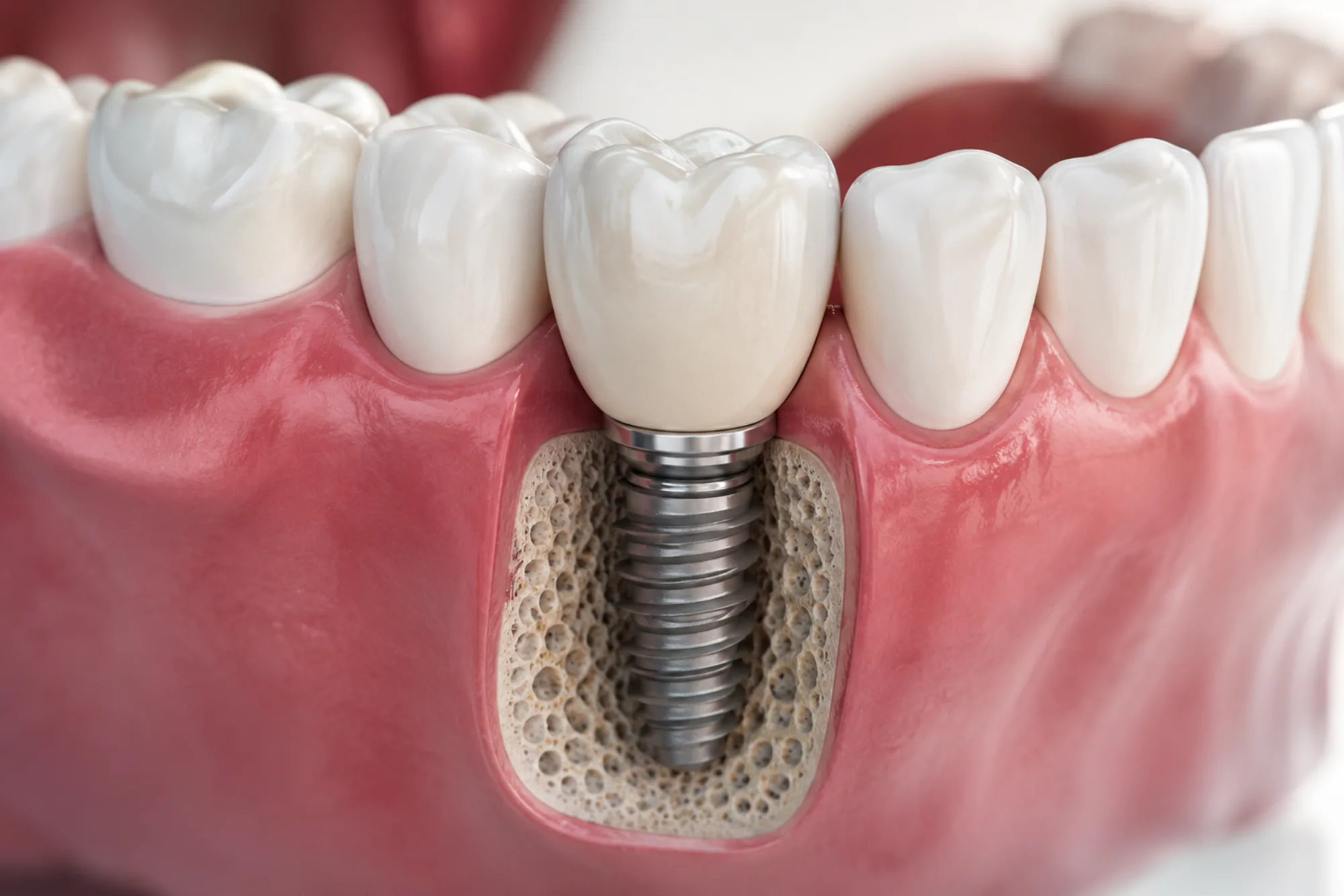
The implant used in implant treatment is a special structure placed into the jawbone to mimic the root of the lost tooth. Typically made of titanium, this system fuses with the bone during the healing process, creating a solid foundation for the prosthetic tooth to be placed on top. This process of integration between the implant and the bone is called osseointegration in dentistry.
Depending on the treatment plan, a single crown, a bridge, or components supporting a removable denture can be placed on top of the implant. In this way, the implant mimics not only the visible part of the tooth but also the root support. However, an implant is not always necessary for every missing tooth. For some patients, traditional bridges, removable dentures, or other prosthetic options may be more appropriate. The decision on which method is appropriate is made following a clinical examination and radiological evaluation.
In Which Cases Are Implants Used?
Implant treatment can be considered for a range of clinical conditions, from the loss of a single tooth to complete edentulism. The main applications are as follows:
- Single tooth loss: The goal is to restore the missing tooth without grinding down adjacent healthy teeth.
- Multiple missing teeth: Instead of placing a separate implant for each missing tooth, a bridge supported by an appropriate number of implants may be planned.
- Complete edentulism: Fixed full-arch dentures or implant-supported removable dentures may be considered.
- If the retention of a removable prosthesis is insufficient, especially in the lower jaw, implant support can be used to increase the prosthesis’s stability.
- Gaps resulting from tooth extraction: In suitable cases, implants can be placed during the same session as the extraction or after healing has occurred.
The decision to proceed with implants is not based solely on the number of missing teeth. Bone quality, gum structure, occlusion, the patient’s oral hygiene habits, and systemic health status are also taken into consideration.
How Is Implant Treatment Performed?
Implant treatment is generally a surgical procedure performed under local anesthesia. Before the procedure, the area is numbed, the site where the implant will be placed is prepared, and an implant of the appropriate size is placed into the jawbone. After the surgical procedure, a healing period is required for the implant to fuse with the bone.
Once healing is complete, an abutment and a prosthetic tooth are attached to the implant. In some patients, a temporary tooth can be placed on the same day or within a short period. However, this may not be suitable for every patient. The timing of the procedure is determined by factors such as the implant’s retention strength, the structure of the jawbone, the location of the missing tooth, the bite alignment, and chewing forces.
In Kırşehir, the surgical and prosthetic phases of implant treatment must be planned together. Just as the correct angle and position of the implant are crucial, the functional and aesthetic characteristics of the tooth to be placed on top are also vital for the long-term success of the treatment.
The Treatment Process Step by Step
1. Clinical Examination and Health Assessment
During the initial appointment, the patient’s missing teeth, existing teeth, gum health, and bite relationship are examined. Information is gathered regarding medications being taken, chronic illnesses, past surgeries, smoking habits, and known allergies. If the patient has uncontrolled diabetes, active infections, or certain systemic diseases, consultation with the relevant physician may be required.
2. Radiographic Imaging
Bone height, thickness, and anatomical structures are evaluated using panoramic X-rays and, when deemed necessary, three-dimensional dental tomography. The nerve canal in the lower jaw, the sinus cavities in the upper jaw, and the roots of adjacent teeth are examined in detail. This evaluation helps determine the size and placement angle of the implant.
3. Customized Treatment Plan
The number of missing teeth, type of prosthesis, number of implants, need for additional surgery, and estimated treatment timeline are determined. Alternative treatment options, potential risks, and patient care responsibilities are explained to the patient. The treatment plan is implemented after the patient’s approval is obtained.
4. Surgical Procedure
The implant site is numbed with local anesthesia. A suitable socket is prepared in the jawbone for the implant, and the implant is placed. Stitches may be applied if necessary. The duration of the procedure varies depending on the number of implants and any additional surgical procedures.
5. Osseointegration Period
A healing period of several months is generally required for the implant to fuse with the bone. This period varies from patient to patient and from one area to another. The characteristics of the upper and lower jawbones, bone quality, implant stability, and any accompanying procedures can affect the duration.
6. Impression and Prosthesis Preparation
Once healing is complete, a gingival former or abutment is placed on top of the implant. The prosthesis is designed using digital or traditional impression methods. Color, shape, occlusion, and alignment with adjacent teeth are verified.
7. Placement of the Permanent Prosthesis
The prepared crown, bridge, or full-arch prosthesis is secured to the implants. During final checks, bite forces and contact points are evaluated. The patient is instructed on implant site hygiene and follow-up appointments.
Who Is a Candidate for Implants?
Implant treatment can be considered for individuals whose jaw development is complete and whose general health is suitable for surgical procedures. However, eligibility is not based solely on age. The following conditions are important in treatment planning:
- Sufficient bone volume to support the implant or the ability to perform bone augmentation
- Active gum disease must be under control
- Maintaining a sustainable level of oral hygiene
- Chronic diseases must be under medical control
- The patient’s ability to comply with regular checkups and care recommendations
Heavy smoking, uncontrolled diabetes, advanced bone loss, certain immune system disorders, and the use of specific medications can increase the risks associated with implant treatment. These conditions do not always constitute a definitive contraindication; however, a detailed evaluation must be conducted, and consultation with relevant medical specialties is required when necessary.
Are bone grafts and sinus lifts necessary?
After a tooth extraction, the jawbone may lose volume over time. Particularly in areas where teeth have been missing for a long time, there may not be sufficient bone to support the implant. In such cases, bone augmentation procedures may be planned either before implant placement or during the same session as the implant procedure.
A bone graft involves applying biological or synthetic materials to the affected area to create sufficient bone support around the implant. The scope of the graft procedure can range from filling a small bone defect to more extensive reconstructions.
A sinus lift, on the other hand, can be performed in the posterior region of the upper jaw when the distance between the sinus floor and the jawbone is insufficient for an implant. The goal is to create adequate bone height for the implant by controlled elevation of the sinus membrane and placement of graft material in the resulting space.
Not every implant patient requires a bone graft or sinus lift. The necessity of these procedures is determined based on three-dimensional imaging and a clinical examination. At Ayaz Dent, surgical planning is evaluated by Oral and Maxillofacial Surgeon Orhan İSMAİLZADE, taking the patient’s anatomical conditions into account.
Single-Tooth, Multiple-Tooth, and Full-Arch Implant Treatments
Single-Tooth Implant
In cases of a single missing tooth, an independent crown can be prepared on the implant. This eliminates the need to reduce adjacent teeth to provide support. Aesthetic harmony is a priority in the front region, while resistance to chewing forces is the primary concern in the back region.
Multiple Tooth Gaps
When multiple adjacent teeth are missing, it is not always necessary to place a separate implant for each tooth. Depending on the length of the edentulous area and the bone structure, a bridge can be planned to rest on two or more implants. The number of implants is determined to ensure a balanced distribution of chewing forces.
Full-Arch Implant Procedures
For patients who have lost all their teeth, fixed or removable implant-supported prostheses can be used. In some cases, full-arch fixed prosthesis systems supported by four or six implants, such as All-on-4 or All-on-6, may be considered. However, the number of implants and their placement are not standardized; bone structure, jaw relationship, aesthetic requirements, and cleanability criteria are all evaluated together.
Post-Implant Healing Process
Mild pain, swelling, tenderness, or slight bruising may occur following implant surgery. These effects are generally more pronounced in the first few days and subside over time. It is important to take the medications prescribed by your dentist at the specified dosage and for the recommended duration.
Within the first 24 hours, you should avoid rinsing motions that could irritate the surgical site, very hot foods and beverages, strenuous physical activity, and smoking. Soft foods should be preferred during the first few days, and excessive chewing force should not be applied to the implant site.
You should contact the clinic if you experience persistent bleeding, increasing swelling, a high fever, severe pain, prolonged numbness, or a sensation of movement in the implant. Smooth healing depends not only on the surgical procedure but also on the patient’s adherence to aftercare instructions.
How Should Implants Be Cared For?
Although implants do not decay, the gum and bone tissue surrounding them can become inflamed. Therefore, implants must be cleaned as regularly as natural teeth. Inadequate hygiene can lead to plaque buildup around the implant and, over time, peri-implant diseases.
- Teeth should be brushed at least twice a day using the proper technique.
- The area around the implant should be cleaned with an interdental brush or dental floss suitable for use with implants.
- The undersides of bridges and full-arch dentures should be cleaned of plaque buildup using special cleaning tools.
- Long-term use of antiseptic mouthwash should be avoided unless recommended by your dentist.
- Regular dental checkups and professional cleaning appointments should not be missed.
For individuals who clench or grind their teeth, a night guard may be recommended to protect the implant-supported prosthesis. Additionally, if you notice loosening, breakage, or a change in sensation while chewing, you should visit the clinic immediately without waiting for your next checkup appointment.
Advantages of Implant Treatment
The benefits of implant treatment vary depending on the patient’s clinical condition and the type of prosthesis used. When properly planned, the main advantages are as follows:
- Restoration of chewing function in the area of the missing tooth
- Protection of adjacent teeth from wear in cases of single-tooth loss
- Improved retention and stability of removable dentures
- Preparation of fixed restorations that closely resemble natural teeth
- Functional support of the jawbone in the area of the missing tooth
- Improving comfort during speech and daily activities
To benefit from these advantages, proper patient selection, detailed planning, appropriate surgical techniques, good prosthetic design, and regular maintenance are required. As with other treatments, no guarantee of a specific outcome or lifespan can be provided for implant procedures.
Why Is Implant Treatment Important in Kırşehir?
Implant treatment is not a simple procedure that is completed in a single visit. It is a process that involves surgical and prosthetic stages and requires follow-up. For this reason, it is important for the patient to have easy access to follow-up appointments, to be able to discuss post-surgical progress with their doctor, and to undergo regular evaluations during the prosthetic phase.
Undergoing implant treatment at a center in Kırşehir can make it easier for patients living in the city to access appointments for examinations, surgical procedures, suture checks, impressions, try-ins, and long-term maintenance. Local follow-up contributes to the smooth and consistent management of the treatment process, particularly for patients who have undergone additional surgery or for whom multiple implants are planned.
Patients researching a private dentist or dental clinic in Kırşehir should not base their decision solely on price. The dentist’s expertise, the traceability of the implant system used, sterilization protocols, imaging capabilities, the transparency of the treatment plan, and the post-operative follow-up process should all be evaluated together.
The Implant Approach at Ayaz Dent
At Ayaz Dent Dental Clinic, implant treatment is approached with a personalized planning strategy based on the patient’s current oral health and long-term needs. During the initial examination, not only the area of the missing tooth but also gum health, the condition of the other teeth, the bite relationship, and the cleanability of the prosthesis to be applied are evaluated.
Surgical planning and any advanced surgical procedures deemed necessary are evaluated by Oral and Maxillofacial Surgeon Orhan İSMAİLZADE based on clinical and radiological findings. The color, shape, proportions, and harmony of the implant-supported teeth with the patient’s smile are addressed during the prosthetic and aesthetic phases of treatment. Throughout this process, Aesthetic Dentist Hasan Ayaz adopts an approach that ensures the restoration harmonizes with the patient’s natural teeth and facial aesthetics.
At Ayaz Dent, the goal is not to provide the same treatment for every patient; rather, it is to create a treatment plan tailored to each patient’s needs—from single-tooth replacement to full-jaw rehabilitation—that is easy to maintain and monitor. The implant system to be used, the prosthetic material, and the treatment schedule are explained to the patient following the examination.
Related Treatment Options
The implant plan is personalized. In suitable cases, zirconia implants, one-day implant protocols, or All-on-4/All-on-6 options for full-arch restoration may be considered. During the surgical process, oral and maxillofacial surgical support is provided when necessary, while the prosthetic phase focuses on achieving aesthetic harmony through zirconia crowns and smile design. Digital planning and imaging are utilized during the planning phase. For more detailed information, you can schedule an appointment or contact us through our communication channels.
Conclusion
Implant treatment is a comprehensive treatment option used to restore missing teeth both functionally and aesthetically. For successful planning, it is essential to evaluate not only the placement of the implant into the jawbone but also the patient’s overall health, bone and gum structure, bite relationship, prosthesis design, and long-term oral hygiene habits.
To learn more about implant treatment in Kırşehir and find out if it is right for you, please contact the Ayaz Dent Dental Clinic in Kırşehir Center. Following a clinical examination and necessary imaging, you will receive detailed information about alternative treatment options, the process, and care requirements.
This content is intended for general informational purposes only. It does not replace a diagnosis or treatment plan. Eligibility for implant treatment can only be determined following a dental examination and radiological evaluation.
Implant Treatment in Kırşehir — Frequently Asked Questions
How long does implant treatment take?
The duration of implant treatment may vary depending on the number of implants to be placed, the condition of the jawbone, and any additional surgical procedures. While the surgical procedure may be completed in a single session for some patients, a healing period of several months may be required for the implant to integrate properly with the bone. The preparation of permanent prosthetics is also carried out according to this plan.
Is implant treatment a painful procedure?
Since the procedure is performed under local anesthesia, you should not feel any pain during the procedure. Once the effects of the anesthesia wear off, you may experience mild tenderness, swelling, or discomfort. These symptoms can usually be managed with the medications and care recommendations provided by your doctor.
What tests are performed before getting dental implants in Kırşehir?
Prior to implant planning, an intraoral examination is performed, and a panoramic X-ray—or, when deemed necessary, a 3D dental CT scan—is used to evaluate the jawbone. This allows for detailed planning of the bone structure, nerve pathways, and implant placement.
Can an implant be placed immediately after a tooth is extracted?
In some patients, it may be possible to place an implant during the same session as a tooth extraction. However, this decision is made after evaluating the risk of infection, bone structure, gum health, and whether the implant can provide sufficient stability. Not every extraction site may be suitable for same-day implant placement.
Is implant treatment suitable for everyone?
Implant treatment can be considered for many individuals whose jaw development is complete and who are in good overall health. However, bone volume, gum health, chronic diseases, and oral hygiene habits play an important role in treatment planning. Eligibility can only be determined following a clinical examination.
When can I start eating normally after implant treatment?
It is recommended to eat soft foods during the first few days following surgery. As the healing process progresses, you can return to your normal diet in accordance with your doctor’s recommendations. Chewing function is largely restored following the placement of permanent dentures, although this process may vary from person to person.
How long does an implant last?
The lifespan of dental implants cannot be expressed as a single timeframe. Regular oral hygiene, keeping up with dental checkups, limiting tobacco use, and maintaining the health of the tissues surrounding the implants are all important for long-term use.
Why do dental implant prices in Kırşehir vary from person to person?
The cost of implant treatment may vary depending on the number of missing teeth, the implant system to be used, the type of prosthesis, additional procedures such as bone grafting or sinus lifting, and the scope of the treatment. For this reason, it is not appropriate to provide a specific price estimate without a consultation.
What precautions should be taken after implant treatment?
In the first few days, it is important to avoid hard foods that may put strain on the implant site, to maintain careful oral hygiene, and to take the medications prescribed by your dentist regularly. In addition, attending your scheduled follow-up appointments regularly helps ensure that the healing process is monitored properly.
What should you look for when choosing a clinic for dental implant treatment in Kırşehir?
When choosing a clinic, it is not just the price that matters; the dentist’s experience, the reliability of the implant systems used, sterilization practices, digital imaging capabilities, and the post-treatment follow-up process should all be evaluated together. A thorough examination and personalized treatment planning are key steps in successful implant treatment.